LivePeople

LivePeople is a scalable citizen science infrastructure for personal data projects. In this documentation we focus on how to use and access the existing datasets.

Dataset examples

Examples of dataset usages

Previous studies investigated various aspects of high-quality rich datasets that include sensor data and self-reports. Some examples are (for papers based on DiversityOne, we list the sensor modalities used):

  • the use of social media (Giunchiglia et al. 2018)

    Datasets: the authors used the SmartUnitn2 dataset, which has the same modalities and variables as DiversityOne: time diaries, application usage, screen status.

  • the quality of answers and mislabeling (Bontempelli et al. 2020)

    Datasets: authors used SmartUnitn2 dataset, a similar dataset. The corresponding input modalities in DiversityOne are time diaries, acceleration, screen status, airplane mode, gyroscope, ring mode, battery charge, battery level, magnetic field, doze modality, headset plugged in, music playback, location, WiFi network connected to, proximity, WiFi networks available, Bluetooth, running application, notifications, atmospheric pressure (the following modalities are not available in DiversityOne: linear acceleration, gravity, rotation vector, orientation, temperature, humidity, detect incoming and outgoing calls, detect incoming and outgoing SMS).

  • the usefulness of self-reports towards understanding the user’s subjective perspective of the local context (Zhang et al. 2021);

    Datasets: SmartUnitn2 dataset. The corresponding input modalities in DiversityOne are time diaries, acceleration, screen status, airplane mode, gyroscope, ring mode, battery charge, battery level, magnetic field, doze modality, headset plugged in, music playback, activity performed (Google Activity Recognition API), location, WiFi network connected to, proximity, WiFi networks available, Bluetooth, notifications, atmospheric pressure (the following modalities are not available in DiversityOne: linear acceleration, gravity, rotation vector, orientation, temperature, humidity).

  • the impact of COVID on the students’ lives (Girardini et al. 2023)

    Datasets: the authors relied on SmartUnitn2 dataset and DiversityOne in Italy: time diaries.

  • cross-individual activity recognition (Shen et al. 2022);

  • mood inference (Meegahapola et al. 2023)

    Datasets: for all countries: location, Bluetooth, WiFi, cellular, notifications, proximity, activity steps, screen events, user presence, touch events, app events, time diaries.

  • diversity perceptions in a community (Kun et al. 2022);

  • activity recognition (Bouton-Bessac, Meegahapola, and Gatica-Perez 2022)

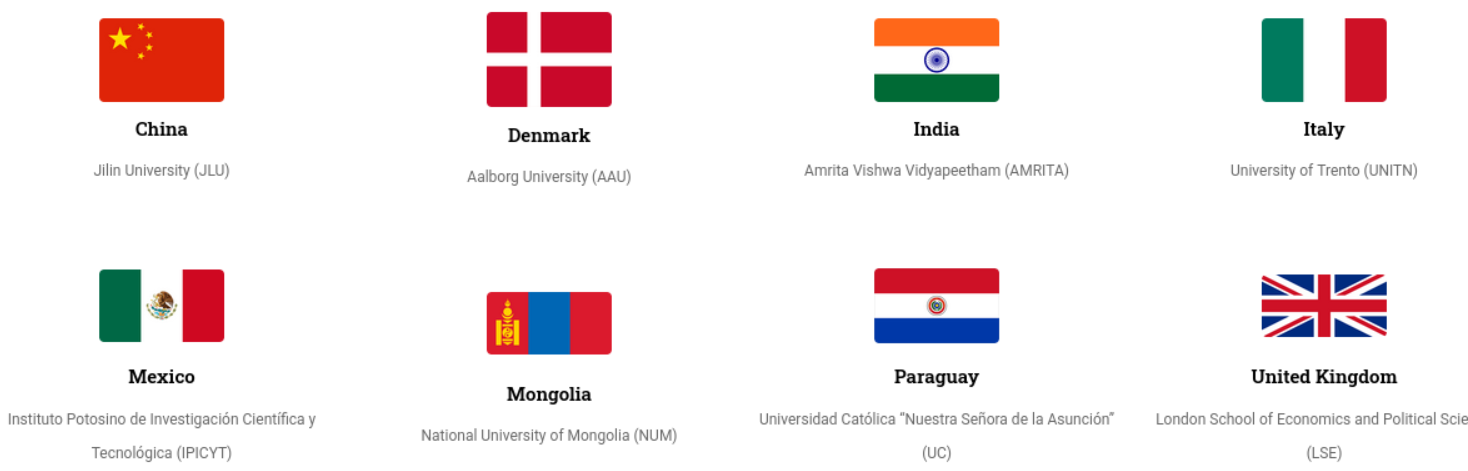
    Datasets: accelerometer and time diaries data of Denmark, UK, Mongolia, Paraguay and Italy.

  • social context inference while eating (Kammoun, Meegahapola, and Gatica-Perez 2023)

    Datasets: for all countries activity type, step count, location, phone signal, WiFi, Bluetooth, battery, and proximity, notifications, application usage, screen episodes user presence and time diaries.

  • inferring mood-while-eating (Bangamuarachchi et al. 2025)

    Datasets: for all countries: location, Bluetooth, WiFi, cellular, notifications, proximity, activity, steps detector, step counter, screen events, user presence, touch events, app events, time diaries.

  • the generation of contextually rich data with other reference datasets (Giunchiglia and Li 2024).

    Datasets: authors used SmartUnitn2 dataset, a similar dataset. The corresponding input modalities in DiversityOne are location and time diaries.

References

Bangamuarachchi, Wageesha, Anju Chamantha, Lakmal Meegahapola, Haeeun Kim, Salvador Ruiz-Correa, Indika Perera, and Daniel Gatica-Perez. 2025. “Inferring Mood-While-Eating with Smartphone Sensing and Community-Based Model Personalization.” ACM Transactions on Computing for Healthcare (HEALTH). https://arxiv.org/abs/2306.00723.
Bontempelli, Andrea, Stefano Teso, Fausto Giunchiglia, and Andrea Passerini. 2020. “Learning in the Wild with Incremental Skeptical Gaussian Processes.” In IJCAI. https://www.ijcai.org/proceedings/2020/0399.pdf.
Bouton-Bessac, Emma, Lakmal Meegahapola, and Daniel Gatica-Perez. 2022. “Your Day in Your Pocket: Complex Activity Recognition from Smartphone Accelerometers.” In International Conference on Pervasive Computing Technologies for Healthcare, 247–58. Springer. https://www.idiap.ch/\~gatica/publications/BoutonBessacEtAl-ph22.pdf.
Girardini, Nicolò Alessandro, Simone Centellegher, Andrea Passerini, Ivano Bison, Fausto Giunchiglia, and Bruno Lepri. 2023. “Adaptation of Student Behavioural Routines During Covid-19: A Multimodal Approach.” EPJ Data Science 12 (1): 55. https://epjds.epj.org/articles/epjdata/abs/2023/01/13688_2023_Article_429/13688_2023_Article_429.html.
Giunchiglia, Fausto, and Xiaoyue Li. 2024. “Big-Thick Data Generation via Reference and Personal Context Unification.” In ECAI 2024, 1975–84. IOS Press. https://ebooks.iospress.nl/doi/10.3233/FAIA240713.
Giunchiglia, Fausto, Mattia Zeni, Elisa Gobbi, Enrico Bignotti, and Ivano Bison. 2018. “Mobile Social Media Usage and Academic Performance.” Computers in Human Behavior 82: 177–85. https://arxiv.org/abs/2004.01392.
Kammoun, Nathan, Lakmal Meegahapola, and Daniel Gatica-Perez. 2023. “Understanding the Social Context of Eating with Multimodal Smartphone Sensing: The Role of Country Diversity.” In Proceedings of the 25th International Conference on Multimodal Interaction, 604–12. https://arxiv.org/abs/2306.00709.
Kun, Peter, Amalia de Götzen, Miriam Bidoglia, Niels Jørgen Gommesen, and George Gaskell. 2022. “Exploring Diversity Perceptions in a Community Through a q&a Chatbot.” In DRS2022: Bilbao Design Research Society, 1–19. https://arxiv.org/abs/2402.08558.
Meegahapola, Lakmal, William Droz, Peter Kun, Amalia De Götzen, Chaitanya Nutakki, Shyam Diwakar, et al. 2023. “Generalization and Personalization of Mobile Sensing-Based Mood Inference Models: An Analysis of College Students in Eight Countries.” Proceedings of the ACM on Interactive, Mobile, Wearable and Ubiquitous Technologies 6 (4): 1–32. https://arxiv.org/abs/2211.03009.
Shen, Qiang, Haotian Feng, Rui Song, Stefano Teso, Fausto Giunchiglia, Hao Xu, et al. 2022. “Federated Multi-Task Attention for Cross-Individual Human Activity Recognition.” In IJCAI, 3423–29. IJCAI. https://www.ijcai.org/proceedings/2022/0475.pdf.
Zhang, Wanyi, Qiang Shen, Stefano Teso, Bruno Lepri, Andrea Passerini, Ivano Bison, and Fausto Giunchiglia. 2021. “Putting Human Behavior Predictability in Context.” EPJ Data Science 10 (1): 42. https://epjds.epj.org/articles/epjdata/abs/2021/01/13688_2021_Article_299/13688_2021_Article_299.html.
Back to top